In June, the Transit Director (in her capacity as Oregon Transit Association President) testified to the Joint Committee on Transportation on LC 43, a measure that would allow Transit agencies across the State to use Statewide Transportation Improvement Funds (STIF) to maintain existing service and consolidate the STIF and STF funding. As agencies across the State struggle with increased costs and decreased revenue, it is vital that agencies have flexibility in funding use. As you may remember, STIF funding could only be used for expanded or enhanced (new) service. During times of COVID, it will be more important to maintain existing service and shift service modes to meet the needs of the community (like delivering Meals on Wheels) rather than expand. The measure became Senate Bill 1601 and the Sandy Director again testified in front of the First Special Session of 2020 in support of the bill. The bill passed the Senate and the House Friday, June 26. This is great news for Oregon transit agencies, including SAM as we strive to maintain pre-COVID service levels.
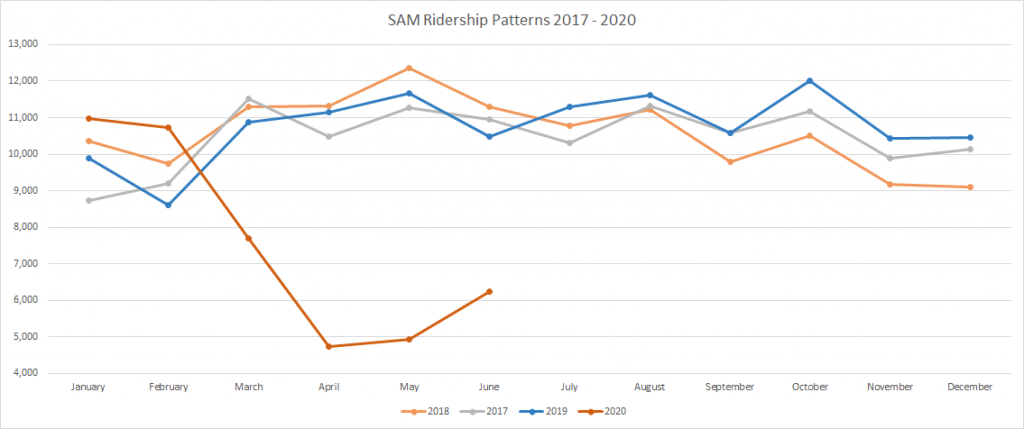
In June, ridership increased to 6250, a 27% growth from April. However, this is approximately 40% of our ridership numbers compared to June 2019.
As riders begin to return and social distancing guidelines remain in place, SAM will need to face the very real possibility that extra vehicles and drivers may be needed to meet the needs of the community. At this point in time, SAM staff and MV have agreed to have a back up vehicle ready in the event that a bus cannot accommodate everyone at a stop. For example, the Shopper Shuttle can currently only accommodate 5 people, including the driver. In June, the Shopper carried 3.4 people an hour. If Clackamas County reopens and enters stage 2, we may see the Shopper Shuttle reach capacity in just a few weeks.
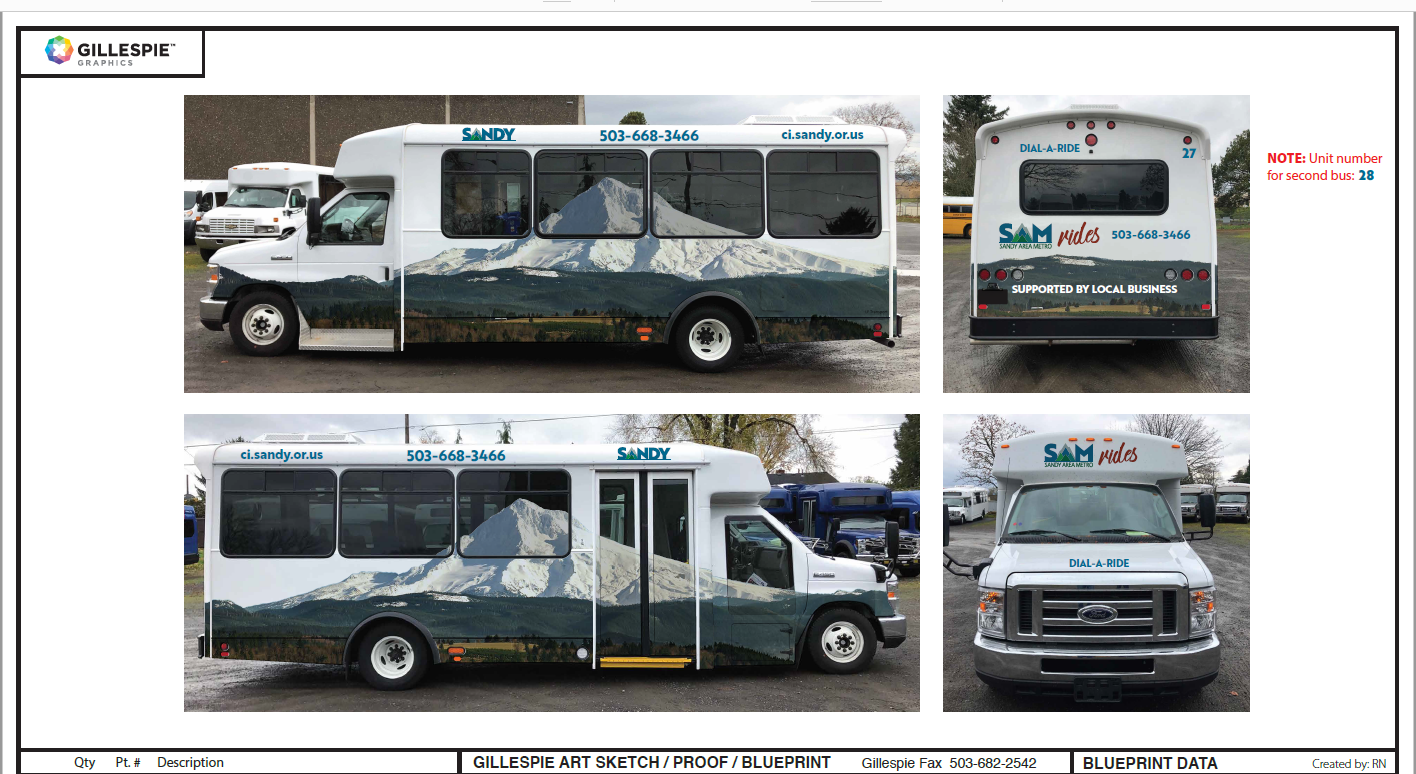
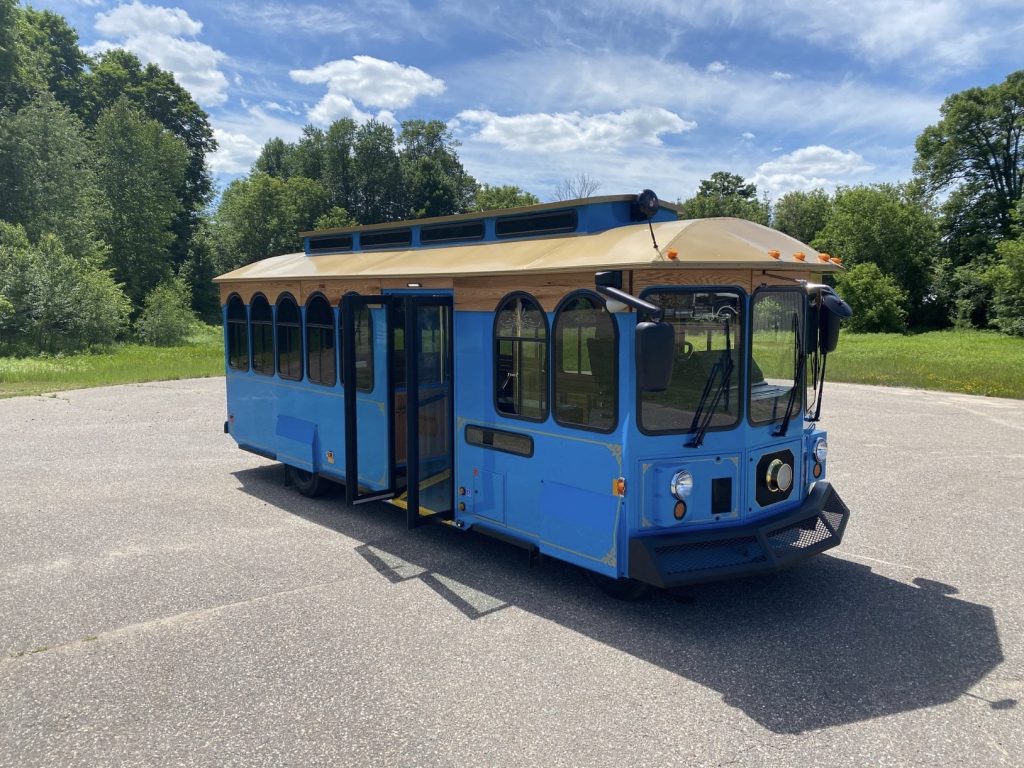
Also in June, the bus wash repairs were complete with new replacement parts and plumbing, resulting in a near complete replacement and like new mechanics. The bus barn construction continues and this beautiful vehicle was shipped.

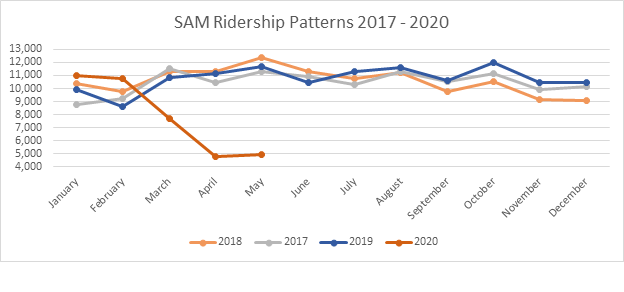
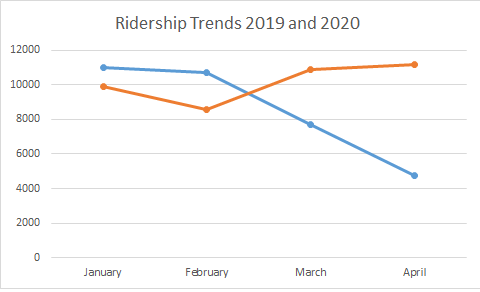
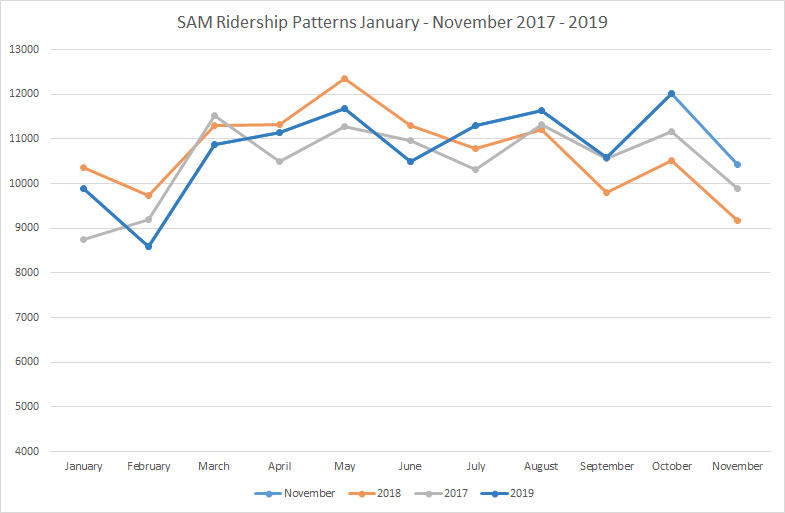
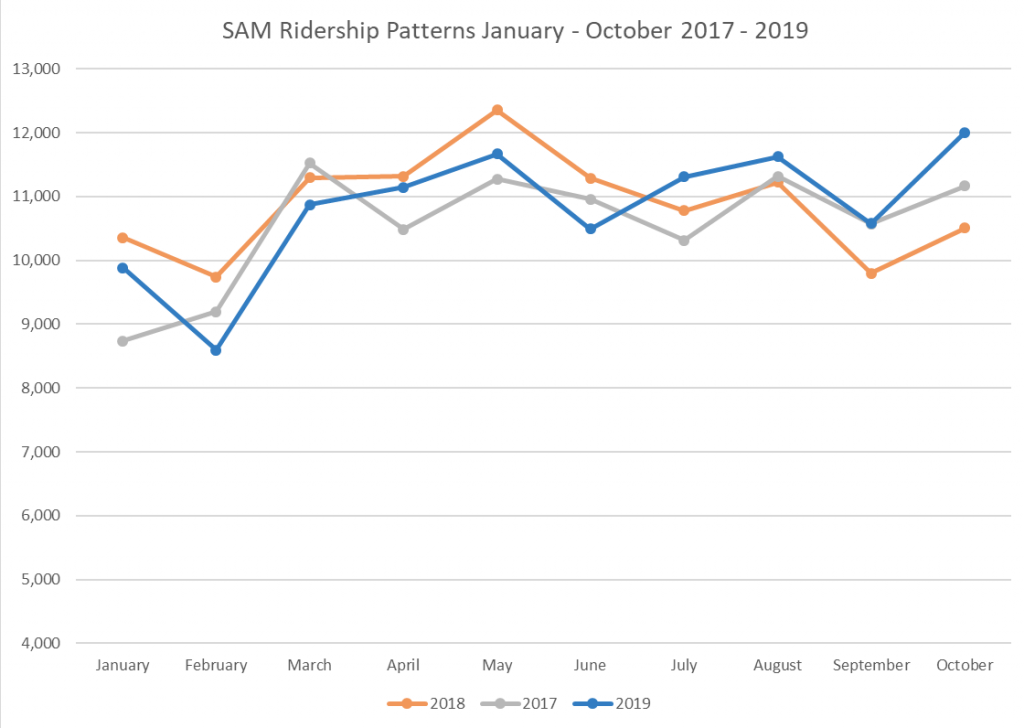
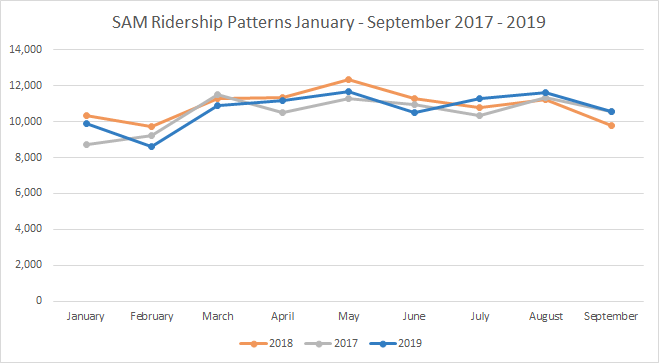
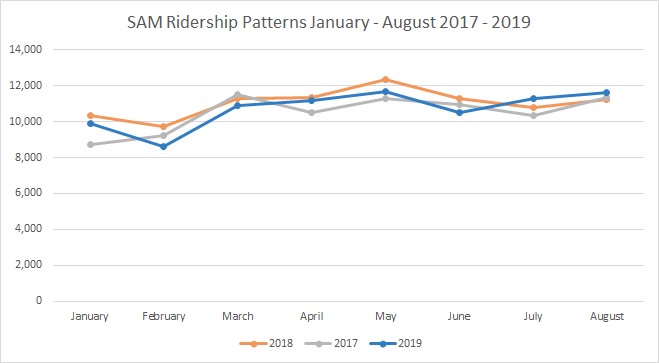
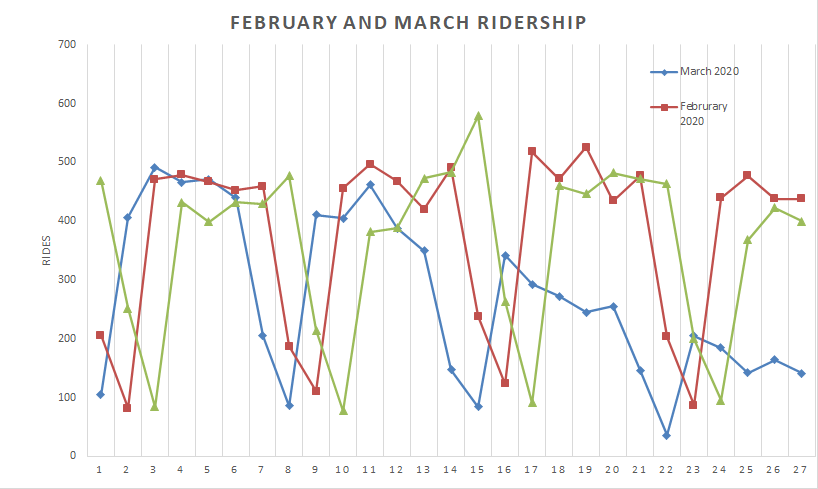 Due to the COVID-19 virus, Transit is watching ridership very closely to determine the needs of the community. As you can see from the chart, ridership has declined significantly (blue line). February 2020 is represented by red line showing that ridership was strong, stronger than March of 2019 (green), until the Covid-19 stay in place orders.
 Ridership was up in January 2020 as compared to January 2019, an overall increase of 11.04%. SAM services provided 10,974 rides in January, compared to 9,883 in January 2019. 8,074 of those rides were on the SAM Gresham route, an increase of 8.07%. The SAM Estacada route is experiencing increases in ridership as well, with 47.8% increased ridership. The Shopper Shuttle increased by 111.7% providing over 1,000 rides in January. SAM rides experienced a decrease of 24%, likely due to a combination of more available shopper shuttle hours and dispatch/scheduler changes. The Edlerly and Disabled medical rides program (ED) also saw a decrease of 9.4%.